Wednesday, April 5, 2023

Apex Magazine Interviews Nina Munteanu About Story, Ecology, and the Future


Issue  #128 of Apex Magazine featured an interview that Rebecca E. Treasure did with me, posted on December 10, 2021 on their site. We discussed the power of story, the use of dystopian narrative, and the blur between fiction and non-fiction to create meaningful eco-fiction. Here’s part of the interview. For the complete interview go here:

INTERVIEW

Nina Munteanu, author of “Robin’s Last Song,” is a prolific creator with multiple books, podcasts, short stories, and nonfiction essays in publication. Her work spans genre, from eco-fiction to historical fantasy to thrillers, and of course, science fiction. Her work as an ecologist informs all of her writing, which circles around an essential exploration; the relationship between humanity and our environment.

 At the top of Nina Munteanu’s website, there is a quote: “I live to write, I write to live.” This sentiment is reflected in her fiction, which is not just about characters in compelling situations solving their problems with compassion, but is about all of us, our planet, our environment, and our future.

Nina Munteanu sat down with Apex for a conversation about story, ecology, and the future.

APEX MAGAZINE: Your novels and short stories examine the role and evolution of humanity in the context of nature and technology. As an ecologist, what do you believe needs to happen—internationally, nationally, locally, and personally—to restore our planet and move forward in a sustainable way?

NINA MUNTEANU: All things animate and inanimate naturally oscillate toward equilibrium or balance in a kind of stable chaos of polarities. Goethe and Hegel told us this long ago. Our actions have exacerbated this oscillation through massive extraction, habitat destruction, and pollution with associated conflicts, take-over and subjugation. Everything is connected and all have contributed to climate change and habitat change. Our mission—given that we’re responsible for much of that imbalance—is to help the planet return itself to balance. That means ensuring that Nature’s natural checks can do their job to ensure functional forests and phytoplankton, a healthy ocean, a resilient biodiversity—all systems that we rely on for our own healthy existence. Restoring our denuded global forests, and the oceans will need the concerted and united efforts of all nations and individuals. We have the knowledge, the science, and technology; all that is needed is the will. And that can only change as our own narrative changes. That’s where storytelling plays a key part. Surveys have proven that fiction can be deeply persuasive through character journey that convinces at a deeper more emotional level (as opposed to a litany of facts that appeals only at an intellectual level).

AM: Do you believe industry and sustainability are compatible? What about colonialism and sustainability? Capitalism? In other words, is sustainability something we can achieve with our current systems, or is global systemic change required?

NM: Some people—mostly economists—would say definitely yes to the first question; we just need to be conservationist in our approach to doing business. But the very basis of capitalism is exploitation, not conservation. The driving force behind capitalism is fear and uncertainty and its main process is exploitation. From an ecologist’s perspective, this makes sense for a community during its early succession and growth stage …  when it first colonizes a new area. Ecologists call this approach r-selected (for rate), based on the need to be profligate and fast-growing to successfully establish. But as we reach a climax community and our carrying capacity—where we are now—this r-selected approach no longer works. We need an economic model that better matches this new paradigm. NOT based on continued growth! A climax global economy, one based on cooperation not competition. Elisabet Sahtouris calls this ecological economy “ecosophy.” In his book Designing Regenerative Cultures, Daniel Christian Wahl talks about changing our evolutionary narrative from one based on fear defined by a perception of scarcity, competition, and separation to one based on love defined by a perception of abundance, a sense of belonging, collaboration, and inclusion. He promotes a regenerative economy based on true reciprocation.

And moving forward we can take a lesson from Robin Wall Kimmerer who promotes a gift economy—an economy of abundance—whose basis lies in recognizing the value of kindness, sharing, and gratitude in an impermanent world. This is what she says: “Climate change is a product of [our] extractive economy and is forcing us to confront the inevitable outcome of our consumptive lifestyle, genuine scarcity for which the market has no remedy. Indigenous story traditions are full of these cautionary teachings. When the gift is dishonored, the outcome is always material as well as spiritual. Disrespect the water and the springs dry up. Waste the corn and the garden grows barren. Regenerative economies which cherish and reciprocate the gift are the only path forward. To replenish the possibility of mutual flourishing, for birds and berries and people, we need an economy that shares the gifts of the Earth, following the lead of our oldest teachers, the plants.”

AM: The language in your stories is richly thematic, using strong description to weave the subtext into the piece. For example, “killing two squirrels with one stone.” Is that something that comes about organically as you compose a piece, or a more intentional part of editing?

NM: I use both processes to achieve a final narrative that is multi-layered with metaphor, symbols, and deep meaning. The first process is through intuition derived through intimacy; the second process is more deliberate and generated through objectivity. Insights from intimacy come about organically, during moments of true inspiration, when my muse connects me to the deeper truth of a character’s voice and actions. Given that the inner story runs many layers (some of which I, as writer, may not even be overtly aware) and links in a fractal relationship with the outer story, those moments of inner inspiration happen as if of their own accord. That’s what writers mean when they admit that their characters “talk” to them and instruct them on what to write. When a writer achieves that level of intimacy and understanding, they can let the muse guide them.

Much of the description that is woven into story is generated through the editing process when I read the manuscript as a reader. The process involves letting the story sit for a while so when I return to it, I am reading more objectively. During this process, I apply my knowledge in storytelling craft to showcase combustible moments in plot, and work in foreshadowing, subtext, and compelling metaphor. A writer can’t add metaphor without context related to story theme (otherwise this may result in what the industry calls “purple prose”). Metaphor—given its roots in the deeper psyche of a culture—must arise organically from a deep, sometimes intuitive, understanding—where the personal meets the universal.   

AM: Your work takes complex topics that are nonetheless critical to humanity’s future and pulls stories with compelling characters out of them, making the science accessible, the warnings personal to the reader. This has always been one of the callings of science fiction. What is the role of stories in the climate action movement?

NM: Our capacity and need to tell stories is as old as our ancient beginnings. From the Paleolithic cave paintings of Lascaux to our blogs on the internet, humanity has always shared story. Story is powerful in how it helps us define who we are, what’s important to us, and where we are going. Stories compel with intrigue, stir our emotions, connect with our souls through symbols, archetypes and metaphor. Stories inspire action. We live by the stories we tell.

For too long, our stories have promoted a dominant worldview of exploitation and capitalism. We’ve been telling the patriarchal story of “othering” for too long; we need a new voice and a new worldview to replace our old stories of conquering and taming a “savage land” and “savage people.” When Copernicus proclaimed in 1543 that the sun did not revolve around the Earth, it took a long time for the world to accept and let go of its Ptolemaic Earth-centered view. But the world did come around eventually to the point now that this is common knowledge and lies embedded in our daily lives and language.

Storytelling about how the Earth takes care of us and how we can take care of Earth is urgently needed. This means shifting our stories from an exploitive capitalist narrative of separation toward an inclusive partnership narrative. This means embracing a more eco-centric worldview; a worldview in which humanity is not central, but lies embedded within greater planetary forces and phenomena. A worldview that sees humanity only as part of a greater entity, as participant in a greater existential celebration of life and the elements. A humanity that must learn to play along, not bully and take over. A humanity that must embrace compassion, respect and kindness; a humanity directed by humility—not hubris. It is my firm belief that until our worldview embraces humility in partnership with the natural world—until we cast off our self-serving, neo-liberal, capitalist ideologies—we will remain hampered in our journey forward. When we change our stories, we change our lives and we change the world along with it.

This is already happening with the emergence of a strong eco-voice by writers through the feminine voice, the gylanic voice, the voice of the marginalized, of ecology and the environment itself. Authors such as Barbara Kingsolver, Annie Proulx, Margaret Atwood, Richard Powers, Emmi Itäranta Cherie Demaline, Grace Dillon, and Cormac McCarthy give Nature a face and voice to care about. And caring is the first step.

AM: Your stories also bridge fiction with nonfiction, using speculative fiction as a lens to bring your subject into focus for the reader. How does that work? Why do you approach story in this way?

NM: Marcie McCauley with Temz Review observed that, “[Munteanu] does not appear to view fiction and non-fiction as separate territories; or, if she does, then this book [A Diary in the Age of Water] is a bridge between them.” In Herizons, Ursula Pflug called the book “a bit of a hybrid, and Munteanu a risk-taker.” Buried in Print wrote of the same book, “ultimately it exists in an in-between place, some mystical elements of the generational tale possibly alienating the dedicated science-y readers and the instructional elements possibly alienating fiction devotees. And, yet, I read on: strangely compelling.”

I find that I enjoy this in-between place that blurs fiction with nonfiction. It’s more edgy, gripping, and believable, albeit fantastical, even playfully challenging at times. For instance, I may subvert facts, creating semi-facts to tease the discerning reader (e.g. when the diarist in “A Diary in the Age of Water” observed that President Trump had gone blind from staring at the sun during an eclipse; while Trump did stare directly at the sun without eye protection during an eclipse in 2017, he did not go blind—yet). Readers have told me that the story was more impactful; they honestly didn’t know what was taken from fact and what was fictionalized. Such narrative reads like a true story and there is little more tantalizing than eavesdropping on another’s real experience and intrigue. The risk—that the blur will either confuse the reader or invalidate its truths and message—is hopefully addressed through compelling narrative that engages the reader. But this is also why I tend to include an extensive bibliography at the end of a novel or short story.

Readers have told me that my fiction/nonfiction storytelling trope, like “mundane science fiction,” grips my stories with a more keen sense of relevance. Given that I am writing mostly climate fiction and eco-fiction these days, that sense of relevance is exactly what I wish to achieve. 

AM: A last question. Both “The Way of Water” and “Robin’s Last Song” showcase the relationships women have with each other, the importance of human connection, the damage that disconnecting from each other can do and, inversely, the power of connection. In your view, what is the role of individuals and local communities in the climate crisis?

NM: There are many things we can do as individuals and as part of a community. I was recently asked this question by the Toronto Star and I responded with three things:

●      First, plant a tree; make an actual difference through action. By doing that, we get out from hiding under the bed and face the monster of climate change and show that we care and that we are not alone.

●      Second, vote for green politicians. Politicians need to hear directly from their communities. They need you to push them to act on climate change.

●      Third, find your tribe and create a movement. Everyone says that people have the power, but that power comes best through numbers and solidarity. Find your tribe and you’ll find yourself more motivated. So, start with you and your home: plant trees; put in a rain garden; put in permeable driveways and solar panels; lower meat intake, especially beef; don’t buy bottled water. Then connect with your physical community and social media community. Let them know what you’re doing and why. Work with your community. All members of a community can help change how your street looks and behaves by communicating with your local government, attending meetings, and having a voice. Initiate a tree-planting program in your parks and street greens. Do stream or lake cleanups. Let the leaders of your community know you care and are willing to do something about it. The wave of change starts local and ripples out into a global phenomenon. Change comes from the heart and heart is where the home is.

For the entire interview, go to Apex Magazine, December 10, 2021.

Road along Otonabee River on a foggy winter morning, ON (photo and rendition by Nina Munteanu)

Rebecca E. Treasure grew up reading science fiction and fantasy in the foothills of the Rocky Mountains. After grad school, she began writing fiction. Rebecca has lived many places, including the Gulf Coast of Mississippi and Tokyo, Japan. She currently resides in Texas Hill Country with her husband, where she juggles two children, two corgis, a violin studio, and writing. She only drops the children occasionally. To read more visit www.rebeccaetreasure.com.

Thursday, February 9, 2023

Eco Fiction that Makes you Care and Gives you Hope


 The environment and how we treat it has always been important to me since I was a child. My passion for storytelling morphed into writing, but the underlying park came through environmental activism. I got a university degree in aquatic ecology, published numerous papers, and now write eco-fiction that is grounded in accurate science with a focus on human ingenuity and compassion. The most meaningful and satisfying eco-fiction is ultimately optimistic literature that explores serious issues with heroic triumph. Each of these favourites intimately connects human to environment. Each moved me to cry, think, and deeply care.

Check out what I say about each choice here: https://shepherd.com/best-books/eco-fiction-that-make-you-care-and-give-you-hope 


Nina Munteanu is a Canadian ecologist / limnologist and novelist. She is co-editor of Europa SF and currently teaches writing courses at George Brown College and the University of Toronto. Visit www.ninamunteanu.ca for the latest on her books. Nina’s bilingual “La natura dell’acqua / The Way of Water” was published by Mincione Edizioni in Rome. Her non-fiction book “Water Is…” by Pixl Press(Vancouver) was selected by Margaret Atwood in the New York Times ‘Year in Reading’ and was chosen as the 2017 Summer Read by Water Canada. Her novel “A Diary in the Age of Water” was released by Inanna Publications (Toronto) in June 2020.

Monday, November 21, 2022

Nine Eco Fiction Novels Worth Reading and Discussing


In most fiction, environment plays a passive role that lies embedded in stability and an unchanging status quo. From Adam Smith’s 18thCentury economic vision to the conceit of bankers who drove the 2008 American housing bubble, humanity has consistently espoused the myth of a constant natural world capable of absorbing infinite abuse without oscillation. This thinking is the ideological manifestation of Holocene stability, remnants from 11,000 years of small variability in temperature and carbon dioxide levels. This stability easily gives rise to deep-seated habits and ideas about the resilience of the natural world.  

But this is changing. 


Our world is changing. We currently live in a world in which climate change poses a very real existential threat to most life currently on the planet. The new normal is change. And it is within this changing climate that eco-fiction is realizing itself as a literary pursuit worth engaging in.


Eco-Fiction (short for ecological fiction) is a kind of fiction in which the environment—or one aspect of the environment—plays a major role, either as premise or as character. Our part in environmental destruction is often embedded in eco-fiction themes, particularly if  they are dystopian or cautionary (which they often are). At the heart of eco-fiction are strong relationships forged between a major character and an aspect of their environment. The environmental aspect may serve as a symbolic connection to theme and can illuminate through the sub-text of metaphor a core aspect of the main character and their journey: the grounding nature of the land of Tara for Scarlet O’Hara in Margaret Mitchell’s Gone With the Wind; the over-exploited sacred white pine forests for the lost Mi’kmaq in Annie Proulx’s Barkskins; the mystical life-giving sandworms for the beleaguered Fremen of Arrakis in Frank Herbert’s Dune.


Many readers are seeking fiction that addresses environmental issues but explores a successful paradigm shift: fiction that accurately addresses our current issues with intelligence and hope. The power of envisioning a certain future is that the vision enables one to see it as possible. 


 “the best part about writing science fiction,” writes Ottawa SF author Marie Bilodeau, “is showing different ways of being without having your characters struggle to gain rights. Invented worlds can host a social landscape where debated rights in this world – such as gay marriage, abortion and euthanasia – are just a fact of life." The emerging sub-genre of ‘mundane science fiction’ addresses Bilodeau’s argument by featuring worlds and people within a new paradigm of ‘ordinary’. Eco-fiction examples of ‘mundane’ include Paolo Bacigalupi’s The Windup Girland Kim Stanley Robinson’s post-climate-change drowned New York 2140.  


In fact, eco-fiction has been with us for decades—it just hasn’t been overtly recognized as a literary phenomenon until recently and particularly in light of mainstream concern with climate change (hence the recently adopted terms ‘climate fiction’, ‘cli-fi’, and ‘eco-punk’, all of which are eco-fiction). Strong environmental themes and/or eco-fiction characters populate all genres of fiction from the literary fiction of Richard Powers to the speculative fiction of Margaret Atwood and the science fiction of Frank Herbert. This establishes eco-fiction as a cross-genre phenomenon of literature better described as a focus or treatment than a sub-genre or brand, per se. My thought on the emergence of the term eco-fiction to describe works is that we are all awakening—novelists and readers of novels—to our changing environment. We are finally ready to see and portray environment as an interesting character with agency.


The ten examples I list below of impactful, highly enjoyable works of eco-fiction represent a range of genre, writing style, topic and treatment. Some are optimistic; others are not or have ambiguous endings that require interpretation. The relationship of humanity to environment also differs greatly among these examples as does the role of science. What they all have in common is that they are worth reading and discussing.


Flight Behavior 
by Barbara Kingsolver (HarperCollins, 2012) is a literary fiction, whosepremise of climate change and its effect on the monarch butterfly migration is told through the eyes of Dellarobia Turnbow, a rural housewife, who yearns for meaning in her life. It starts with her scrambling up the forested mountain—slated to be clear cut—behind her eastern Tennessee farmhouse; she is desperate to take flight from her dull and pointless marriage of myopic routine. The first line of Kingsolver’s book reads: “A certain feeling comes from throwing your good life away, and it is one part rapture.” Dellarobia thinks she’s about to throw away her ordinary life by running away with the telephone man. But the rapture she’s about to experience is not from the thrill of truancy; it will come from the intervention of Nature when she witnesses the hill newly aflame with monarch butterflies who have changed their migration behavior.


Flight Behavior is a multi-layered metaphoric study of “flight” in all its iterations: as movement, flow, change, transition, beauty and transcendence. Flight Behavior isn’t so much about climate change and its effects and its continued denial as it is about our perceptions and the actions that rise from them: the motives that drive denial and belief. When Dellarobia questions Cub, her farmer husband, “Why would we believe Johnny Midgeon about something scientific, and not the scientists?” he responds, “Johnny Midgeon gives the weather report.” Kingsolver writes: “and Dellarobia saw her life pass before her eyes, contained in the small enclosure of this logic.”


The Overstory by Richard Powers
(W.W. Norton, 2018) is a pulitzer prize winning work of literary fiction that follows the life-stories of nine characters and their journey with trees--and ultimately their shared conflict with corporate capitalist America.


Each character draws the archetype of a particular tree: there is Nicholas Hoel's blighted chestnut that struggles to outlive its destiny; Mimi Ma's bent mulberry harbinger of things to come; Patricia Westerford's marked up marcescent beech trees that sings a unique song; and Olivia Vandergriff's immortal ginkgo tree that cheats death--to name a few. Like all functional ecosystems, these disparate characters--and their trees--weave into each other's journey toward a terrible irony. Each in his or her way battles humanity's canon of self-serving utility--from shape-shifting Acer saccharin to selfless sacrificing Tachigali versicoloured--toward a kind of creative destruction.


At the heart of The Overstory is the pivotal life of botanist Patricia Westerford, who will inspire a movement. Westerford is a shy introvert who discovers that trees communicate, learn, trade goods and services--and have intelligence. When she shares her discovery, she is ridiculed by her peers and loses her position at the university. What follows is a fractal story of trees with spirit, soul, and timeless societies--and their human avatars.


Maddaddam Trilogy 
by Margaret Atwood (McClelland & Stewart, 2013) is a work of speculative dystopian fiction that explores the premise of genetic experimentation and pharmaceutical engineering gone awry. On a larger scale the cautionary trilogy examines where the addiction to vanity, greed, and power may lead. Often sordid and disturbing, the trilogy explores a world where everything from sex to learning translates to power and ownership. Atwood begins the trilogy with Oryx and Crake in which Jimmy, aka Snowman (as in Abominable) lives a somnolent, disconsolate life in a post-apocalyptic world created by a viral pandemic that destroys human civilization. The two remaining books continue the saga with other survivors such as the religious sect God’s Gardeners in The Year of the Flood and the Crakers of Maddaddam.


The entire trilogy is a sharp-edged, dark contemplative essay that plays out like a warped tragedy written by a toked-up Shakespeare. Often sordid and disturbing, the trilogy follows the slow pace of introspection. The dark poetry of Atwood’s smart and edgy slice-of-life commentary is a poignant treatise on our dysfunctional society. Atwood accurately captures a growing zeitgeist that has lost the need for words like honour, integrity, compassion, humility, forgiveness, respect, and love in its vocabulary. And she has projected this trend into an alarmingly probable future. This is subversive eco-fiction at its best. 


Annihilation 
by Jeff VanderMeer (HarperCollins, 2014) is a science fiction eco-thriller that explores humanity’s impulse to self-destruct within a natural world of living ‘alien’ profusion.

The first of the Southern Reach TrilogyAnnihilation follows four women scientists who journey across a strange barrier into Area X—a region that mysteriously appeared on a marshy coastline and associated with inexplicable anomalies and disappearances. The area was closed to the public for decades by a shadowy government that is studying it. Previous expeditions resulted in traumas, suicides or aggressive cancers of those who managed to return. 


What follows is a bizarre exploration of how our own mutating mental states and self-destructive tendencies reflect a larger paradigm of creative-destruction—a hallmark of ecological succession, change, and overall resilience. VanderMeer masters the technique of weaving the bizarre intricacies of ecological relationship, into a meaningful tapestry of powerful interconnection. Bizarre but real biological mechanisms such as epigenetically-fluid DNA drive aspects of the story’s transcendent qualities of destruction and reconstruction.  


The book reads like a psychological thriller. The main protagonist desperately seeks answers. When faced with a greater force or intent, she struggles against self-destruction to join and become something more. On one level Annihilation acts as parable to humanity’s cancerous destruction of what is ‘normal’ (through climate change and habitat destruction); on another, it explores how destruction and creation are two sides of a coin.


Barkskins 
by Annie Proulx (Charles Scribner’s Sons, 2016) is a work of literary fiction that chronicles two wood cutters who arrive from the slums of Paris to Canada in 1693 and their descendants over 300 years of deforestation in North America.


The foreshadowing of doom for the magnificent forests is cast by the shadow of how settlers treat the Mi'kmaq people. The fate of the forests and the Mi'kmaq are inextricably linked through settler disrespect for anything indigenous and a fierce hunger for more of the forests and lands. Ensnared by settler greed, the Mi'kmaq lose their own culture and their links to the natural world erode with grave consequence.


Proulx weaves generational stories of two settler families into a crucible of terrible greed and tragic irony. The bleak impressions by immigrants of a harsh environment crawling with pests underlies the combative mindset of the settlers who wish only to conquer and seize what they can of a presumed infinite resource. From the arrival of the Europeans in pristine forest to their destruction under the veil of global warming, Proulx lays out a saga of human-environmental interaction and consequence that lingers with the aftertaste of a bitter wine.


Memory of Water 
by Emmi Itäranta (Harper Collins, 2014) is a work of speculative fiction about a post-climate change world of sea level rise. In this envisioned world, China rules Europe, which includes the Scandinavian Union, occupied by the power state of New Qian. Water is a powerful archetype, whose secret tea masters guard with their lives. One of them is 17-year old Noria Kaitio who is learning to become a tea master from her father. Tea masters alone know the location of hidden water sources, coveted by the new government.  


Faced with moral choices that draw their conflict from the tension between love and self-preservation, young Noria must act before the soldiers scrutinizing her make their move. The story unfolds incrementally through place. As with every stroke of an emerging watercolour painting, Itäranta layers in tension with each story-defining description. We sense the tension and unease viscerally, as we immerse ourselves in a dark place of oppression and intrigue. Itäranta’s lyrical narrative follows a deceptively quiet yet tense pace that builds like a slow tide into compelling crisis. Told in the literary fiction style of emotional nuances, Itäranta’s Memory of Water flows with mystery and suspense toward a poignant end.


The Broken Earth Trilogy 
by N.K. Jemison (Orbit, 2018) is a fantasy trilogy set in a far-future Earth devastated by periodic cataclysmic storms known as ‘seasons.’ These apocalyptic events last over generations, remaking the world and its inhabitants each time. Giant floating crystals called Obelisks suggest an advanced prior civilization.


InThe Fifth Season, the first book of the trilogy, we are introduced to Essun, an Orogene—a person gifted with the ability to draw magical power from the Earth such as quelling earthquakes. Jemison used the term orogene from the geological term orogeny, which describes the process of mountain-building. Essun was taken from her home as a child and trained brutally at the facility called the Fulcrum. Jemison uses perspective and POV shifts to interweave Essun’s story with that of Damaya, just sent to the Fulcrum, and Syenite, who is about to leave on her first mission. 


The second and third books, The Obelisk Gate and The Stone Sky, carry through Jemison’s treatment of the dangers of marginalization, oppression, and misuse of power. Jemison’s cautionary dystopia explores the consequence of the inhumane profiteering of those who are marginalized and commodified.


The Windup Girl 
by Paolo Bacigalupi (Nightshade Books, 2009) is a work of mundane science fiction that occurs in 23rd  century post-food crash Thailand after global warming has raised sea levels and carbon fuel sources are depleted.Thailand struggles under the tyrannical boot of predatory ag-biotech multinational giants that have fomented corruption and political strife through their plague-inducing genetic manipulations. 


The book opens in Bangkok as ag-biotech farangs(foreigners) seek to exploit the secret Thai seedbank with its wealth of genetic material. Emiko is an illegal Japanese “windup” (genetically modified human), owned by a Thai sex club owner, and treated as a sub-human slave. Emiko embarks on a quest to escape her bonds and find her own people in the north. But like Bangkok—protected and trapped by the wall against a sea poised to claim it—Emiko cannot escape who and what she is: a gifted modified human, vilified and feared for the future she brings. 


The rivalry between Thailand's Minister of Trade and Minister of the Environment represents the central conflict of the novel, reflecting the current conflict of neoliberal promotion of globalization and unaccountable exploitation with the forces of sustainability and environmental protection. Given the setting, both are extreme and there appears no middle ground for a balanced existence using responsible and sustainable means. Emiko, who represents the future, is precariously poised.


Parable of the Sower 
by Octavia Butler (Four Walls Eight Windows, 1993) is a science fiction dystopian novel set in 21st century America where civilization has collapsed due to climate change, wealth inequality and greed. Parable of the Sower is both a coming-of-age story and cautionary allegorical tale of race, gender and power. Told through journal entries, the novel follows the life of young Lauren Oya Olamina—cursed with hyperempathy—and her perilous journey to find and create a new home. 


When her old home outside L.A. is destroyed and her family murdered, she joins an endless stream of refuges through the chaos of resource and water scarcity. Her survival skills are tested as she navigates a highly politicized battleground between various extremist groups and religious fanatics through a harsh environment of walled enclaves, pyro-addicts, thieves and murderers. What starts as a fight to survive inspires in Lauren a new vision of the world and gives birth to a new faith based on science: Earthseed. Written in 1993, this prescient novel and its sequel Parable of the Talent speak too clearly about the consequences of “making America Great Again.”


An earlier version of this article was first published on Tor.com in November, 2020, and again in April 22, 2021 as "Ten Eco-Fiction Novels Worth Celebrating" on Tor.com


More Eco-Fiction Worth Reading:


The following is an updated list of eco-fiction books in addition to those featured above that I have since enjoyed. The list is by no means an exhaustive one, but certainly includes my favourites, those that have impacted me and incited me to think and feel and act:


  • Flight Behavior by Barbara Kingsolver
  • The Overstory by Richard Powers
  • Oryx and Crake by Margaret Atwood
  • Anihilation by Jeff Vandermeer
  • Barkskins by Annie Proulx
  • Memory of Water by Emmi Itäranta
  • The Fifth Season by N.K. Jemisin
  • The Windup Girl by Paolo Bacigalupi
  • The Parable of the Sower by Octavia E. Butler
  • Dune by Frank Herbert
  • The Water Knife by Paolo Bacigalupi
  • A Diary in the Age of Water by Nina Munteanu
  • New York 2140 by Kim Stanley Robinson
  • Canadian Tales of Climate Change by Exile Editions (an anthology)
  • Ministry for the Future by Kim Stanley Robinson
  • The Breathing Hole by Coleen Murphy
  • Borne by Jeff Vandermeer
  • The Bear by Andrew Krivak
  • Fauna by Christiane Vadnais
  • Bangkok Wakes to Rain by Pitchaya Sudbanthad 
  • Waste Tide by Chen Qiufan 
  • Future Home of the Living God by Louise Erdrich
  • We by Yevgeny Zamyatin
  • Camp Zero by Michelle Min Sterling
  • Lost Arc Dreaming by Suyi Davies Okungbowa
  • The Word for World is Forest by Ursula K. Le Guin
  • Greenwood by Micheal Christie
  • Where the Crawdads Sing by Della Owens
  • Through the Portal: Tales from a Hopeful Dystopia (edited) by Lynn Hutchinson Lee and Nina Munteanu
(updated April 22, 2025)


Sunday, October 2, 2022

Now is The Age of Nature…


Age of Nature is a series of three films made by PBS and narrated by Uma Thurman about humanity’s relationship with nature and wildlife and how scientists and conservationists study ways to restore the planet. The series, beautifully narrated and filmed, shows how restoring nature might be our best tool to slow global warming. From Borneo to Antarctica, the resilience of the planet is helping us find solutions to cope and even mitigate climate change, providing hope for a more positive future. The series consists of three episodes: AwakeningUnderstanding, and Changing:


In AWAKENINGyou will discover how a new awareness of nature is helping to restore mostly collapsed ecosystems; this included: restoring the cod fishery in Norway’s Lofoten Islands; the restoring the Chagres watershed in Panama; rehabilitating the collapsed ecosystem of Mozambique’s Gorongosa Park; and restoring the denuded Loess Plateau in China by planting a forest (and reducing the sediment in the Yellow River by 80%). This episode shows how innovative actions are being taken to repair human-made damage and restore reefs, rivers, animal populations and more.


“We are at a turning point in history,” says narrator Uma Thurman. “and moving in a new direction. How we live with nature now will determine our future. A new age is upon us, the age of nature.” This new awakening comes with a change in philosophy.


“Materialism has suggested that wealth is coming from things. But, in fact, wealth is coming from ecological function.”—John D. Liu, Ecosystem Ambassador, Commonland Foundation  


In UNDERSTANDING you will explore how a new understanding of nature is helping us find surprising ways to fix it. From the salmon runs and connection to forest health of the Pacific Northwest to restoring fireflies in China, and the reintroduction of wolves in Yellowstone—scientists, citizens and activists are restoring the environment, benefiting humans and animals alike.


“If humans get our acts together and start thinking about the whole ecosystem, we’re going to be recovering the whales and ultimately we’re going to be saving ourselves.”—Dr. Deborah Giles, Killer whale researcher, University of Washington 


In CHANGING you will discover why restoring nature might be our best tool to slow global warming. From Borneo to Antarctica, the resilience of the planet is helping us find solutions to cope and even mitigate climate change, providing hope for a more positive future. Bhutan’s negative carbon system is based on “decades of enlightened but courageous policies,” says Tshering Tobgay, former prime minister of Bhutan. By law they maintain over 60% forest cover to maintain a rich biodiversity and help balance climate as a carbon sink. Over 70% of Bhutanese live along river banks where they cultivate rice and other crops. “We’ve always had a strong association with water,” Tobgay adds. Something here ninahre.


“Ultimately, if we’re going to understand how to stop climate change, we need to understand our planet,” says Professor Tom Crowther, who leads a team of ecologists in categorizing forests and soils around the world from “on the ground information” to understand the carbon they contain and absorb. Crowther stresses that “the key is to restore these ecosystems in the right ecologically-minded way. That means we don’t plant trees in ecosystems that would naturally be grasslands. We also restore trees in a very biodiverse mixture; we don’t just want plantations, monoculture of the same species. We need all the different interacting species which help one another to grow and capture huge amounts of carbon…We absolutely need nature to survive on this planet. If humanity is going to have a chance, we’re going to have to restore ecosystems all across the globe…Biodiversity is the life support for our planet.”


The movie showcases three major ecosystems of significant carbon sequestration that need to be (and are in some cases) encouraged, nurtured and grown:


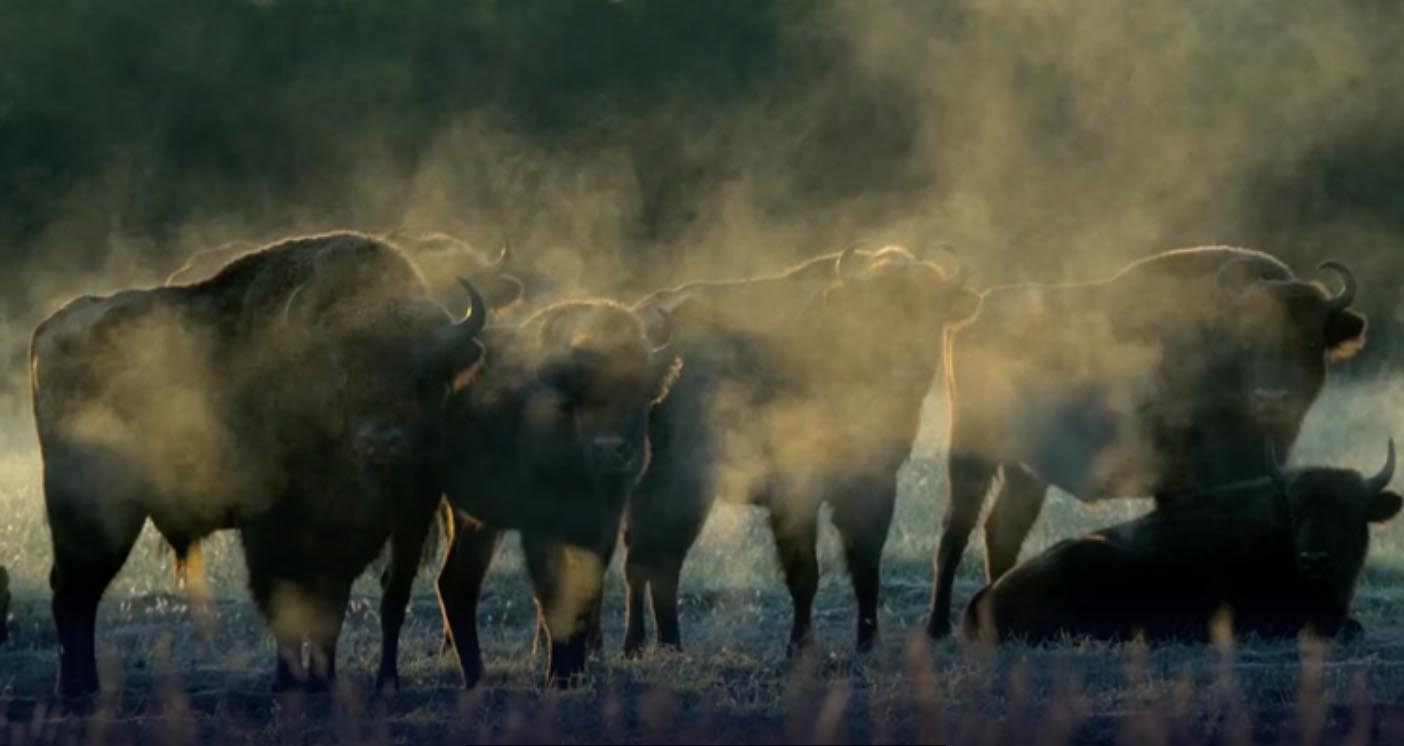
1.  Old growth forests of the world: Bialowieza in Poland is the oldest forest in Europe: 


Malgorzata Blicharska at Uppsala University reminds us of an ecological tenet: the higher the biodiversity of an ecosystem, the more stable and resilient it is. “The more complex the forest is, the more resilient it will be to different environmental pressures, which is really important now in relation to climate change.” A more complex ecosystem has a larger toolkit to draw from when confronted with change. “Even if one species with a particular function disappears because of climate change, there will be other species that take over this function.” This provides a natural buffer to change, helping it cope with disruption. “A natural forest is not a stable forest; it is changing all the time.” Adapting. The simpler the ecosystem, the less likely it will be equipped to adapt to imposed change; the more likely it will collapse with change. 


2,  Ocean phytoplankton, tidal marshes and seagrass meadows: Peter MacReadie, at Deakin University, studies seagrass meadows that store enormous amounts of carbon. They, along with tidal marshes and mangrove forests lock massive amounts of carbon; this is known as blue carbon. Mention what the mangroves do… “Blue carbon is definitely one of the new heros in the climate change mitigation scene.” They not only effectively sequester carbon, they protect coastlines, and they support half of the world’s fisheries.


MacReadie acknowledges the role apex predators in achieving balance in the ecosystem that might otherwise be destroyed by an over-abundance of herbivores. The apex predator keeps a balance not so much by eating prey but through what is called “fear ecology” and achieiving a healthy trophic cascade: the shark changes the behaviour of the next trophic level down, the turtle, that would otherwise over-graze the seagrass. “Through fear, they affect how much turtles breed, where they forage, where they move around,” ultimately creating a healthy balance of apex predators at the top, turtles in healthy balance and seagrass meadows thriving.”


3.  Peatlands: Taryono Darusman, director of research and development of the Katingan Project in Indonesia, tells us that, “globally, peatlands store around five hundred and fifty gigatons of carbon.” Covering only 3% of the land on Earth, peatlands absorb twice the amount of carbon in all the world’s forests—which are ten times the size. Peatland ecosystems also provide for a unique and highly biodiverse community. Peatlands form in wetlands and rainforests; many of these areas have been drained to create canals or for agriculture. The drying peatlands become susceptible to fire. The Borneo fires of 2015 released more carbon than all of North America’s industry of that same year.  


The last ten minutes of the film are truly heartwarming and encouraging as the film documents how awareness is growing and inspiring a grass roots movement, particularly with the brave efforts of youth around the world. People like young Dayak activist, Emmanuela Shinta (who worked with youth groups to replant a destroyed ecosystem in Kalimantan, Borneo), and eleven-year old Madison Edwards (who started a social media campaign to stop oil drilling off the shores of Belize). 


Eco-heroismis sprouting all over the planet in response to her need for balance. Showing us that every single individual can make a difference…